Proactive care management and wellness programs have a significant opportunity to reduce facility transmission rates and lower both near-term and long-term care costs, particularly when needs assessments are introduced at the outset. This paper seeks to illustrate these associations through an in-depth analysis of unique member data.
Methods
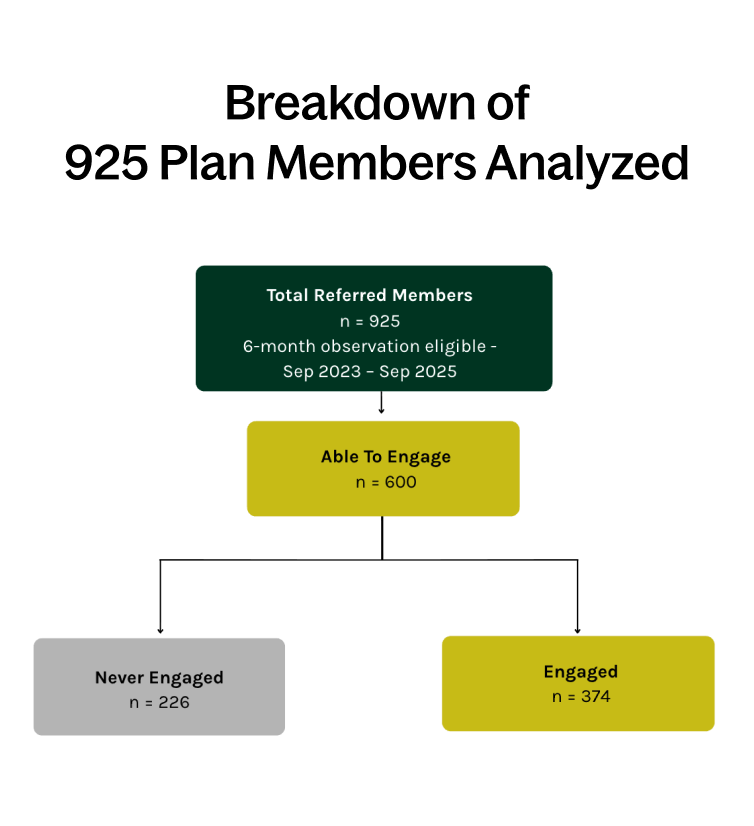
The paper analyzes 2.5 years' worth of longitudinal claims data covering 925 LTCI plan members, examining whether members engaged in wellness programs spend more time at home than non-engaged members, how costs differ by care setting and engagement level, and whether investment in home-based care translates to lower long-term claims expenditure.
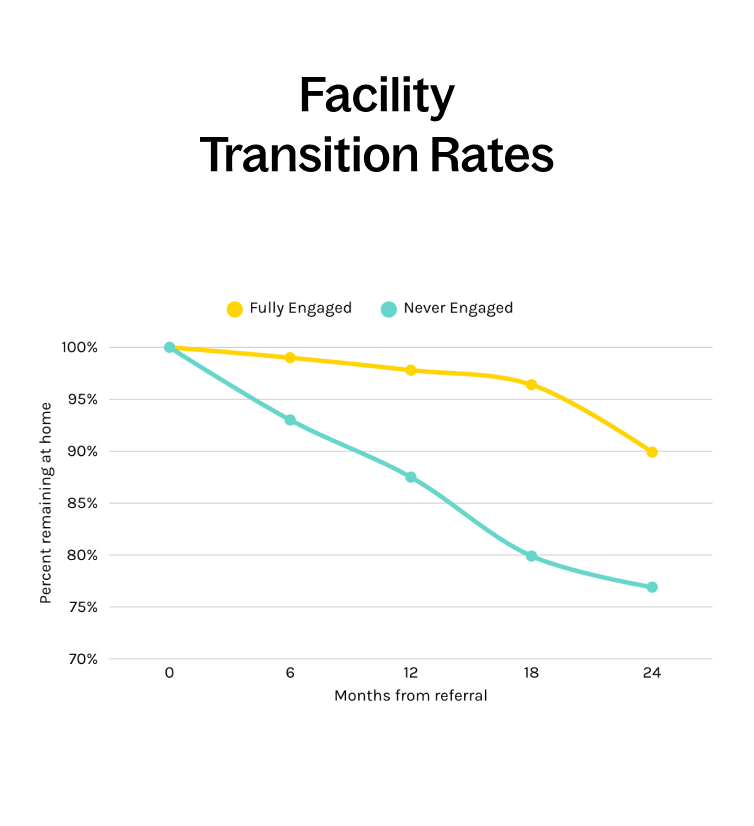
Facility Transition Rates
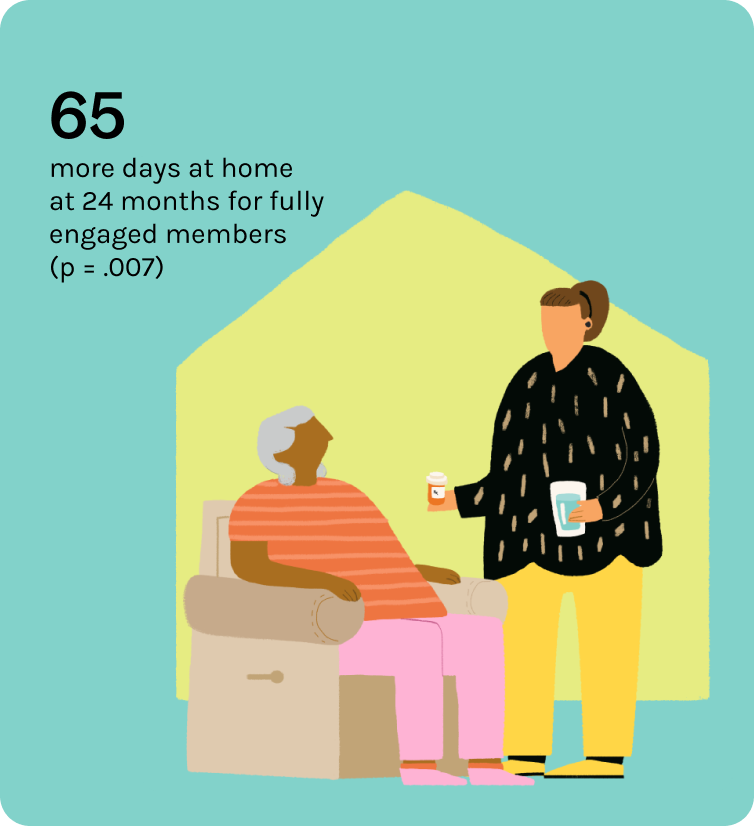
82% lower facility transition rates at 12 months for fully engaged members who completed assessment (p = .007)
Fully Engaged members transition to facilities at a significantly lower rate than Never Engaged members at 12 months.
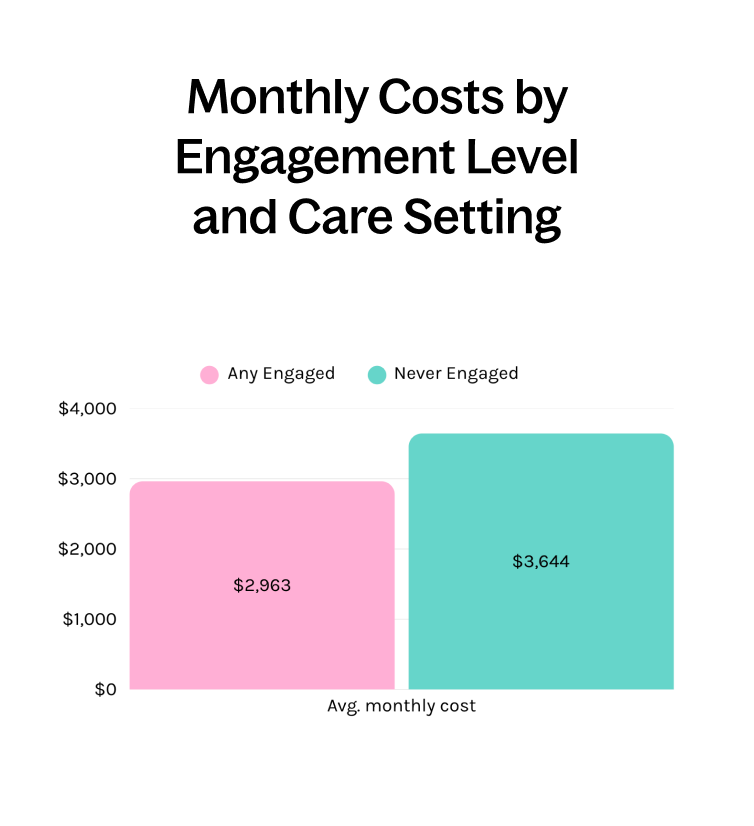
Monthly Costs by Engagement Level and Care Setting
19% lower average monthly claims costs for engaged members (p < .001)
Members who engage with wellness programs at any level spend less on home-based care than Never Engaged members.
Recommendations
Our analysis shows that engaged members spend less on home-based care and transition to facilities at lower rates. Carriers may achieve better outcomes by increasing the share of referred members who complete a full needs assessment — the highest-leverage point in the engagement pathway.
Learn More
Read our full analysis in The Effect of Proactive Care Management on Long-Term Care Insurance Claimants. We encourage you to reach out to us for additional information or partnership inquiries.







.svg)